.png) Call Us
Call Us .png) Consultation
Consultation .png) Book Online
Book Online 

Sometimes, the abdomen doesn't return to the shape you know and love. Pregnancy can stretch the skin and abdominal wall, significant weight loss can leave loose skin, and aging can slowly change the look and feel of your midsection. Even with healthy habits and regular exercise, these changes may remain. A tummy tuck, also called abdominoplasty, removes extra skin, repairs the abdominal wall if needed, and reshapes your midsection for a smoother, firmer look. At Schoemann Plastic Surgery, Dr. Mark Schoemann customizes each tummy tuck plan to fit your body, your proportions, and your personal goals.

1 of 6
A tummy tuck is a cosmetic surgery that removes extra skin from the abdomen and tightens the deeper tissues of the abdominal wall. It is especially helpful when the issue is not just extra fat, but stretched skin or weak abdominal support that exercise alone cannot fix.
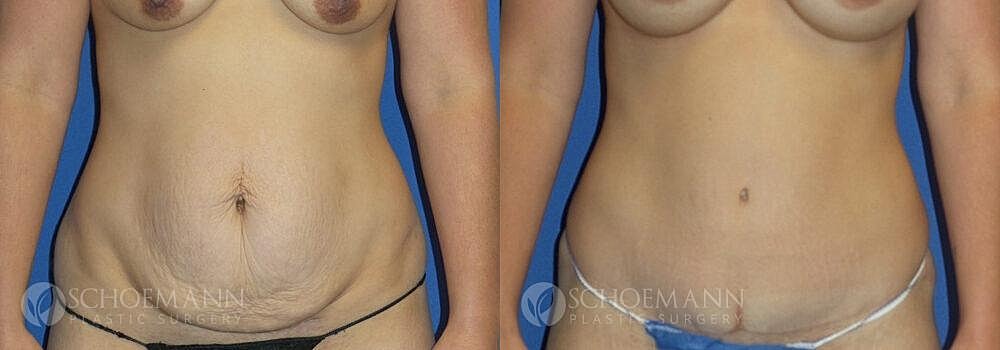
Many people consider tummy tuck surgery after pregnancy. As the abdomen grows, the tissue between the main stomach muscles can stretch and separate. This is called diastasis recti, and it can make the stomach look rounded or stick out even after losing pregnancy weight. When needed, a tummy tuck can tighten the tissue over these separated muscles as part of the repair.
Losing a lot of weight can cause a different issue. The weight is gone, but the skin may not shrink enough to fit your new shape. In this case, removing extra skin can help more than trying to lose more weight.
A tummy tuck is not meant for weight loss. It works best if you are already at or close to a steady weight and want to improve the shape and firmness of your abdomen.

People arrive at the same procedure for very different reasons. One person may have loose skin after having children, while another may have excess abdominal skin after major weight loss. Some patients are mainly bothered by a lower abdominal overhang. Others notice that the entire abdomen still pushes forward despite strengthening their core muscles.
A tummy tuck may improve:
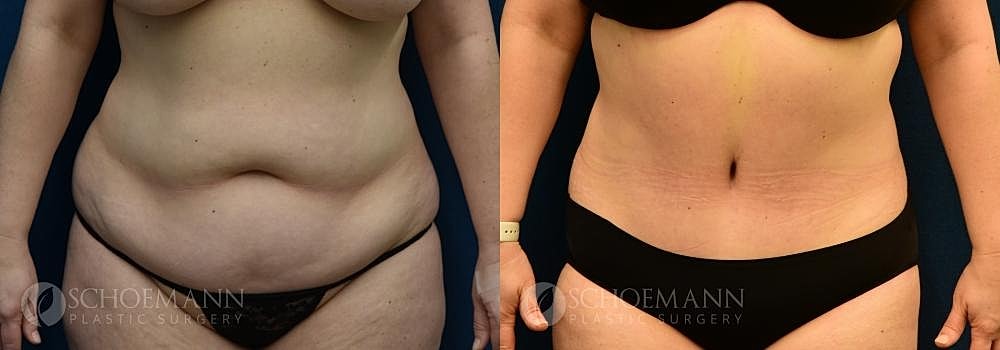
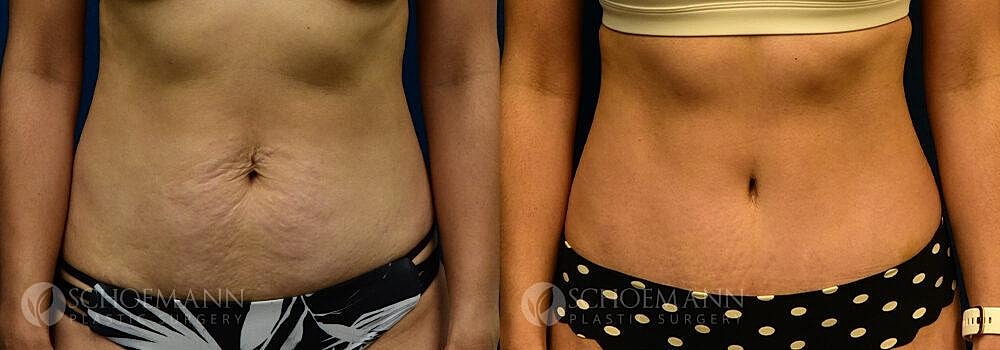
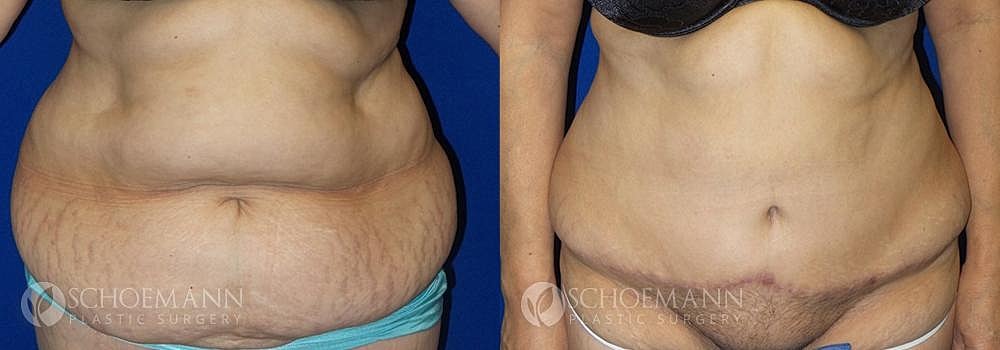
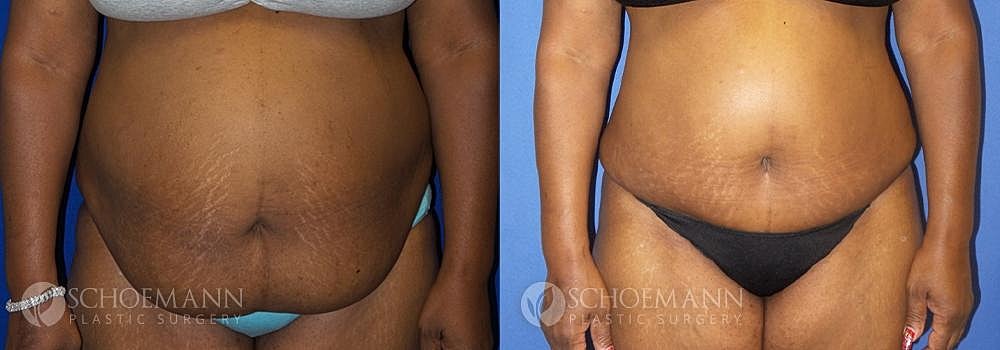
Stretch marks show why it is important to have realistic expectations. If stretch marks are on the skin that is removed, they may go away with it. However, stretch marks on skin above the treated area will still be there after surgery.
Not everyone needs the same type of surgery. Dr. Schoemann checks where the loose skin is, how much skin and fat there are, the condition of your abdominal wall, and how your abdomen fits with your waist and hips before suggesting the best surgical approach.
A full tummy tuck addresses the entire abdomen and is often the best option when significant skin laxity extends both above and below the belly button. The horizontal incision is placed low across the abdomen, commonly extending from hip to hip depending on how much excess tissue needs to be removed. Dr. Schoemann can also perform muscle repair when the abdominal wall has stretched or separated. The skin is then redraped, excess skin is removed, and the belly button is brought through a new opening in the reshaped abdominal skin.
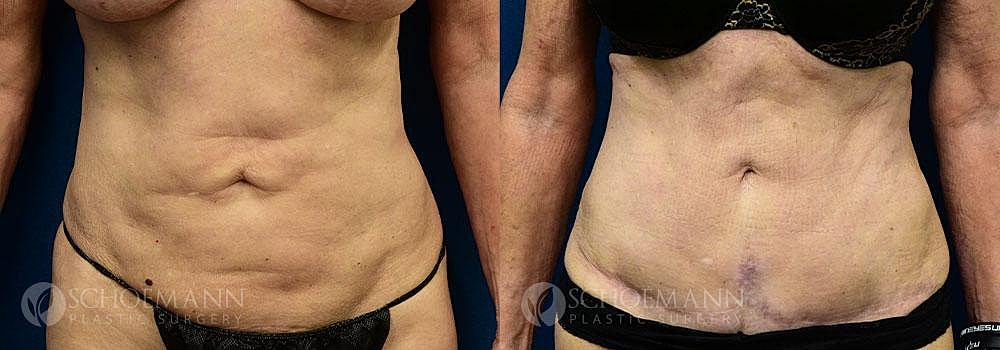
A mini tummy tuck, sometimes called a mini abdominoplasty, focuses on the lower abdomen below the belly button. The incision is usually shorter than with a full tummy tuck because a smaller area is being treated. A mini tummy tuck may sound appealing, but it only works well if the problem is limited to the lower abdomen. If you have a lot of loose skin or muscle separation higher up, a mini tummy tuck might not be enough.
An extended tummy tuck is designed for patients whose excess skin continues farther toward the hips and flanks. The incision is longer, but that additional access allows Dr. Schoemann to improve a broader area rather than stopping the correction at the front of the abdomen.

Many patients ask about this because both procedures can change the midsection, but they work in different ways.
Liposuction removes stubborn fat. If your skin is firm and your main concern is extra fat, liposuction might be all you need. A tummy tuck is better if you have loose skin, extra tissue, or a weak abdominal wall.
Many people have both issues. In these cases, liposuction can be done with a tummy tuck to remove extra fat around the abdomen, waist, or sides, while the tummy tuck focuses on the skin and deeper tissues.
Pregnancy asks a lot of the abdominal wall. The skin stretches, the connective tissue expands, and the abdominal muscles may separate as the baby grows. Some of that change resolves naturally after delivery, but some of it doesn’t.
This is why you might return to your pre-pregnancy weight, exercise often, and still have loose skin or a rounded lower abdomen. In this case, doing more crunches may not help. If stretched tissue or diastasis recti is causing the shape, the problem is structural.
A previous C-section is also taken into account when planning surgery. Depending on where the scar sits and how much lower abdominal skin will be removed, it may be possible to incorporate the old scar into the tummy tuck incision.
If you plan to have more children, Dr. Schoemann may suggest waiting. You can get pregnant after a tummy tuck, but another pregnancy can stretch your skin and abdominal wall again and affect your results.
Tummy tuck surgery is performed under general anesthesia as an outpatient surgical procedure. The operation typically takes several hours, depending on how much correction is needed and whether liposuction is being performed at the same time.
Dr. Schoemann places the incision low on the abdomen and lifts the abdominal skin so he can address the tissues underneath. If muscle separation is present, he repairs the abdominal wall to restore better support. Excess skin is removed, the remaining tissue is redraped, and stubborn pockets of fatty tissue may be treated with liposuction when it will improve the overall contour.
With a full tummy tuck, the belly button stays attached underneath while the surrounding skin moves. A new opening is created for it so it sits naturally within the flatter abdominal contour.
A tummy tuck will leave a permanent scar, and it is important to be clear about that. The incision is placed as low as possible so it can usually be hidden by underwear or most swimsuits. Scar length depends on the procedure. A mini tummy tuck generally has a shorter incision, while a full or extended tummy tuck requires more access because more skin is being removed. The scar is more noticeable at first. Over the next several months, it usually becomes softer and lighter, with most changes happening in the first six to twelve months. How your scar looks in the end depends on your skin, genetics, sun exposure, nicotine use, and how you heal.
Many people who get a tummy tuck already exercise, eat well, and keep a steady weight.
The problem is that loose skin and stretched tissue do not always improve with these efforts. You may be a good candidate if you have extra abdominal skin, loose skin, weak abdominal support, or muscle separation and are healthy enough for surgery. It is also important to have realistic expectations about the scar, recovery, and what body contouring can do.
If you’re still losing a lot of weight, it may be better to wait until you are closer to your ideal weight and can keep it steady. Gaining a lot of weight after surgery can stretch your tissues again and change your results. Your medical history is also important. Previous abdominal surgeries, medications, circulation issues, nicotine use, and other health factors should all be discussed before surgery.

The first few days after a tummy tuck are usually the hardest. Your abdomen may feel tight and sore, and swelling and bruising are normal. It may be hard to stand up straight at first, but most people start to feel better after the first one to three days.
You will wear an abdominal binder or compression garment during the first part of healing to support your abdomen and help with swelling. Dr. Schoemann will also encourage you to walk gently. Moving around helps your circulation and lowers the risk of blood clots.
Most people can start light daily activities in the first one to two weeks. If you have a desk job, you may return to work sooner than someone with a more physical job. Strenuous exercise and heavy lifting usually need to wait about six weeks, depending on your recovery.
You may have temporary numbness or changes in skin feeling, which can take several months to get better. During follow-up visits, Dr. Schoemann will check your healing and tell you when it is safe to do more activities.
You will see that extra skin is gone right after surgery, but swelling means you will not see the final shape right away. As swelling goes down, your abdomen will look smoother and more defined. Most people see their results improve over three to six months.
These results can last for many years. Keeping a steady weight, staying active, and living a healthy lifestyle help keep your new shape. Normal aging will still happen, but big weight changes or future pregnancies can stretch your skin and tissues again.
Yes, you can combine a tummy tuck with other procedures. Liposuction is often done at the same time to remove extra fat around the waist and sides, while the tummy tuck focuses on loose skin and the abdominal wall.
A tummy tuck can also be included in a mommy makeover when pregnancy has affected several areas. Depending on your goals, that might include breast surgery such as breast augmentation or a breast lift to address lost volume or sagging breasts.
Combining procedures is not always the best choice for everyone. Dr. Schoemann will consider your overall health, how much surgery is needed, and what recovery will involve before suggesting other procedures at the same time.
All surgeries have risks. With a tummy tuck, possible complications include bleeding, infection, blood or fluid buildup, slow healing, changes in feeling, scarring, blood clots, and problems related to anesthesia.
Sometimes, blood or fluid collections need to be drained. Poor healing is more common in smokers and people with poor circulation, which is why Dr. Schoemann takes your medical history and nicotine use seriously. Walking early, careful surgery, good aftercare, and following instructions all help lower risks.
Dr. Schoemann will discuss your individual risk factors with you before you decide whether surgery is right for you.
A good tummy tuck is about more than just removing extra skin. The incision, belly button, abdominal wall, waist, and nearby body contours all need to work together for a natural-looking result.
Dr. Mark Schoemann is double-board-certified in plastic surgery and general surgery and completed advanced fellowship training in craniofacial surgery. He brings that detailed understanding of anatomy to cosmetic and reconstructive surgery, along with a careful eye for proportion.
Just as important, he takes time to listen. Your consultation is a chance to discuss what concerns you, what you hope surgery will change, and what kind of recovery works for your life. Dr. Schoemann will explain if a mini tummy tuck, full tummy tuck, extended tummy tuck, liposuction, or another option is best for you.
If you’re bothered by loose skin, a bulging lower abdomen, or changes after pregnancy or weight loss, a consultation can help you learn more. Dr. Schoemann can check your skin, fat, abdominal wall, and muscle separation and explain what a tummy tuck can realistically do for you. The goal is simple: to give you clear information, answer your questions, and create a surgical plan that fits your needs.
Tummy tuck cost depends on how much correction is needed, the surgical techniques involved, and whether liposuction or other procedures are part of your plan. After your consultation, the team can provide a personalized quote based on the surgery Dr. Schoemann recommends.
A tummy tuck is not designed for weight loss. Some skin and fat are physically removed, but the real change is in abdominal contour. The best candidates are already near a stable weight before surgery.
It can. If you have separated abdominal muscles and stretched connective tissue, Dr. Schoemann can repair the abdominal wall during tummy tuck surgery when appropriate.
Most patients are moving around and doing light activities within one to two weeks, although the overall recovery timeline is closer to four to six weeks. Strenuous exercise and heavy lifting should wait until Dr. Schoemann clears you.
Tummy tuck results can last for many years. Maintaining a stable weight and healthy lifestyle will help protect your result, while major weight changes or future pregnancies may stretch the abdominal tissues again.